
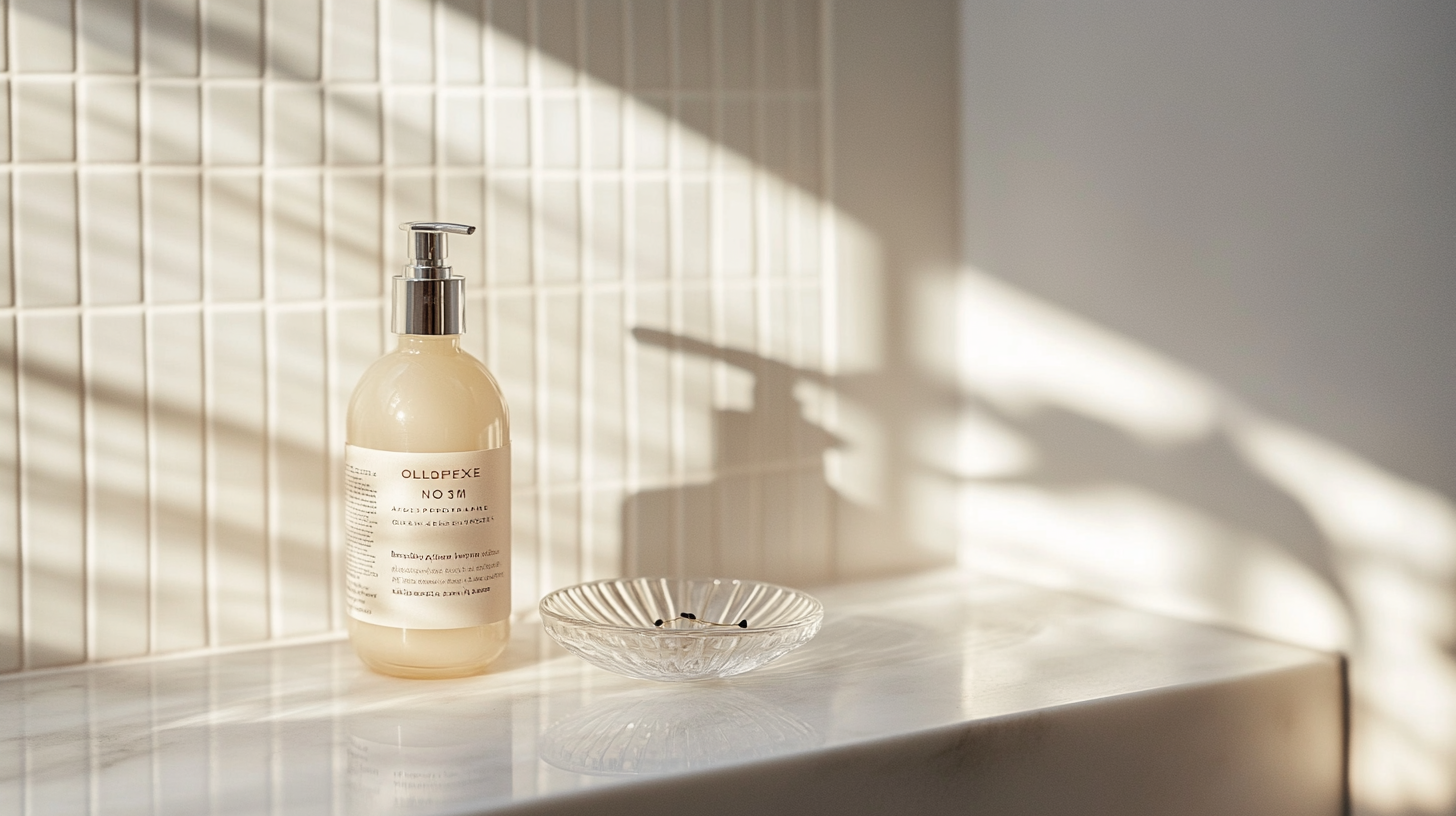
the bathroom has been addressed. i’ve said this before, and i meant it — the mat resolved the cold-floor problem, the fixture swap resolved the hardware aesthetic problem, the small organizational surface-work resolved the visual chaos problem. it was a full spatial remediation conducted over about three weeks in late winter with the methodical intensity that is, apparently, how i process relocation grief. that chapter was declared closed, filed, and not revisited.
what i did not address — because it has no square footage, doesn’t appear in any composition, and isn’t visible in any before-and-after — is what actually happens inside the bathroom. the ritual. the twenty minutes before i become a plausible person. the specific chemistry of what goes on my hair before i’m allowed to open the apartment door and interact with the day. that register has been waiting since february.
here’s the thing about moving cities: your hair knows. or more precisely, your hair’s architecture knows. hair is a structure — keratin protein chains held together by disulfide bonds, which are molecular bridges between sulfur atoms that give each strand its tensile strength, its elasticity, its resistance to the accumulated damage of heat, friction, and water chemistry. manhattan’s water is hard in a specific way. the water here is hard in a different specific way — different minerals, different pH profile, different relationship with the bonds. my hair didn’t communicate this in vocabulary i could interpret; it just started feeling like it had been stressed and hadn’t been consulted about any of it.
i mentioned this to my hairdresser — who i still see quarterly, forty-five minutes south, because some professional relationships are worth commuting for — and she said one word: “olaplex.” she didn’t expand on it. she said it the way someone says a name when they consider the argument already settled and don’t intend to argue.
so i read the ingredient list.
01. olaplex hair perfector no. 3 — the structural intervention
the active compound is bis-aminopropyl diglycol dimaleate — a molecule engineered specifically to locate and rebuild broken disulfide bonds. this is not metaphor, and it’s not “strengthening” in the way shampoo brands use that word, which is to say: coating the strand’s surface with something that mimics structural integrity while doing nothing to the interior. the bis-aminopropyl molecule works on the cortex — the structural core of the hair shaft — where broken bonds actually live. it finds them. it reforms them. olaplex holds the patent on this specific mechanism, which means when they say “bond-building,” they mean it in a proprietary, molecular, demonstrable way rather than the way a moisturizing conditioner brand means it when they’re trying to sound scientific.
this is the part where i have to say clearly: no. 3 is not a conditioner. you do not use it instead of conditioner. you use it on damp — not wet — hair, applied in sections, left in for a minimum of ten minutes, then rinsed before you wash. the damp-not-wet distinction matters: water content opens the hair’s cuticle layer to allow the molecule to penetrate. wet hair closes it. i apply it after rough towel-drying, section by section from the nape forward, with the deliberateness of someone who has read the mechanism documentation and does not intend to compromise the results. a tablespoon handles a full head of hair; it has enough viscosity to stay where you put it rather than migrating. i clip it up and set a timer for twenty minutes. i have tried thirty. i have tried an hour. the structural work happens in the first twenty minutes — beyond that, you’re not building more bonds, you’re just waiting in a different register. julian has walked in on me twice during this window, once reading and once simply sitting with the wall, and i have explained the disulfide bond situation to him both times with full detail. he retains approximately nothing. he uses a 3-in-1 body wash that i am genuinely convinced was formulated for industrial degreasing.
the outcome is material, not cosmetic. not smoother surface — different interior. the strand has a tensile quality it lacked before: resistance to breakage when combing through wet hair, which used to involve a specific friction that it no longer involves. after three weeks of once-weekly use, the change was unambiguous. after six weeks, i stopped noticing it, which is the only review i can give any maintenance object that i consider high: it resolved a condition i had accepted as the new normal. it made the normal a different one. the bottle lasts approximately eight to ten weeks at once-weekly use. the price is $28 for 3.3 oz. the economics require you to think of it as paying per restoration event rather than per usage occasion. this is my third bottle. i have elected not to do the math.
shop: olaplex no. 3 hair perfector →
the bathroom has been addressed in both registers now. the spatial one — the mat, the fixture hardware, the organizational layer that keeps the surface from looking like a crime scene — and the personal one. the ritual that happens inside the room before the room returns to being just a room.
i’ve been trying to identify what makes the material-science framing feel more honest than the self-care framing for the same twenty minutes. i think it’s this: the self-care framing asks you to feel better about the act. it places the value inside the experience, in the quality of the feeling during. the material-science framing asks you to understand what the act does — places the value in the mechanism, in what’s actually being built while you wait. both framings produce the same twenty minutes in the same bathroom. one of them leaves you with an accurate understanding of the object you’re maintaining. that matters to me, even if it’s the same timer either way.
the twenty minutes have become the only scheduled container in my week — not because i need rest in the aspirational sense of that word, but because the timer creates a boundary. a window in which there is exactly one task, and the task is to wait while something structural repairs itself. the bonds are, at this point, almost beside the point.
almost.