
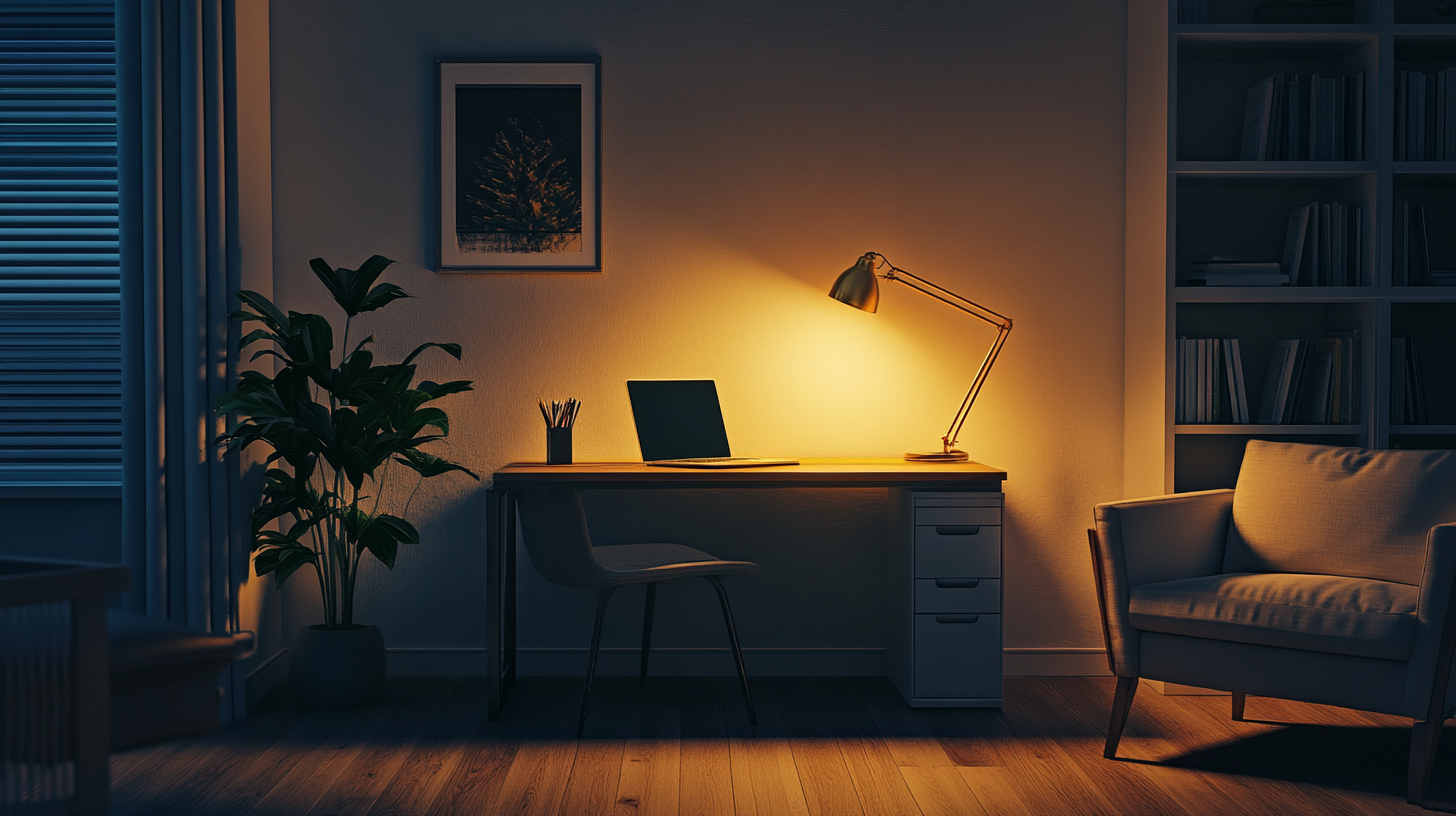
two weeks with the benq desk lamp. this is the preliminary report.
what i expected: better light. the apartment’s recessed LEDs run at 4000K, which is described in lighting documentation as “neutral white” and which i’ve been describing since february as “the clarifying light of an appointment you didn’t make.” the benq runs at 3000K — warm, adjustable, non-fluorescent — and reaches the corner at an angle that makes it feel, and i’m going to use a word i’ve been avoiding, cozy. not in a candle-and-affirmation way. in a thermally regulated, atmospheric demarcation way. the corner has a register now that the rest of the apartment doesn’t have. i didn’t anticipate this as a problem.
what i did not expect: the zone problem.
a zone is what happens when one corner of a room develops its own atmospheric register, distinct from the rest of the room, such that entering it and leaving it feel different. a zone is not just a corner with good light. a zone is a position. and once you have a position in a room, you start to notice how the rest of the room is arranged relative to it.
i’ve been working in this corner for three months. the desk has been there since february, in the space where the desk fit, which was determined by the placement of the reading chair (julian’s), the placement of the couch (for general use, technically, but julian picks his end and maintains it the way a tenant maintains their square footage — with quiet consistency and a specific throw blanket arrangement), and the viewing angle of the television, which the couch is angled toward, which means the couch is julian’s, which means the reading space is julian’s, which means the area where my desk fit was the remaining geometry. i’m not saying anything about this yet. i’m describing the blueprint.
the lamp made me stop and look at the blueprint.
what it did — specifically, the way it cuts a warm circle into the corner and separates it from the apartment’s overhead register — is give me a room-within-a-room. a 3000K island. and from inside that island, for the first time, i could see the rest of the apartment’s arrangement as arrangement. the couch angled toward the television. julian’s reading chair in the better corner — the one with more daylight, less ambient foot traffic, the view of both windows. the coffee table positioned at his knee height. the whole room, i realized, had been organized around julian’s comfort in the living space, and my desk had been placed where the desk went, in the secondary corner, in the less-trafficked geometry, in the space left over after the arrangement was already complete.
i told him this. not confrontationally — as a geographic observation, over dinner, with the specificity it deserved: the chair, the television angle, the table height. he listened, which is something julian is genuinely good at, and then he said: “i didn’t know you’d been working there that long without saying anything.” and i said: “i didn’t know i was working there. i thought i just had a desk.”
the lamp gave me the desk. which gave me the corner. which gave me the standing to notice that the corner was a secondary geographic position in an arrangement i had accepted by default, without either of us naming it, for three months.
we haven’t moved anything yet. we might not. the reading chair is in the right corner for reasons that were, at the time, entirely reasonable — julian was home more in february, the arrangement made practical sense, we were still learning the apartment’s light patterns and which windows did what in which season. none of this was malicious. most of what shapes a shared space isn’t. it’s just gravity — the slow accumulation of small defaults that eventually become the blueprint, until something with 3000K of warm directional light makes you stop and read it.
something is on the table now. on the knee-height coffee table, in the room we both live in, with the furniture arranged the way it’s been arranged since february. we have time. the lamp is not going anywhere. neither am i.